
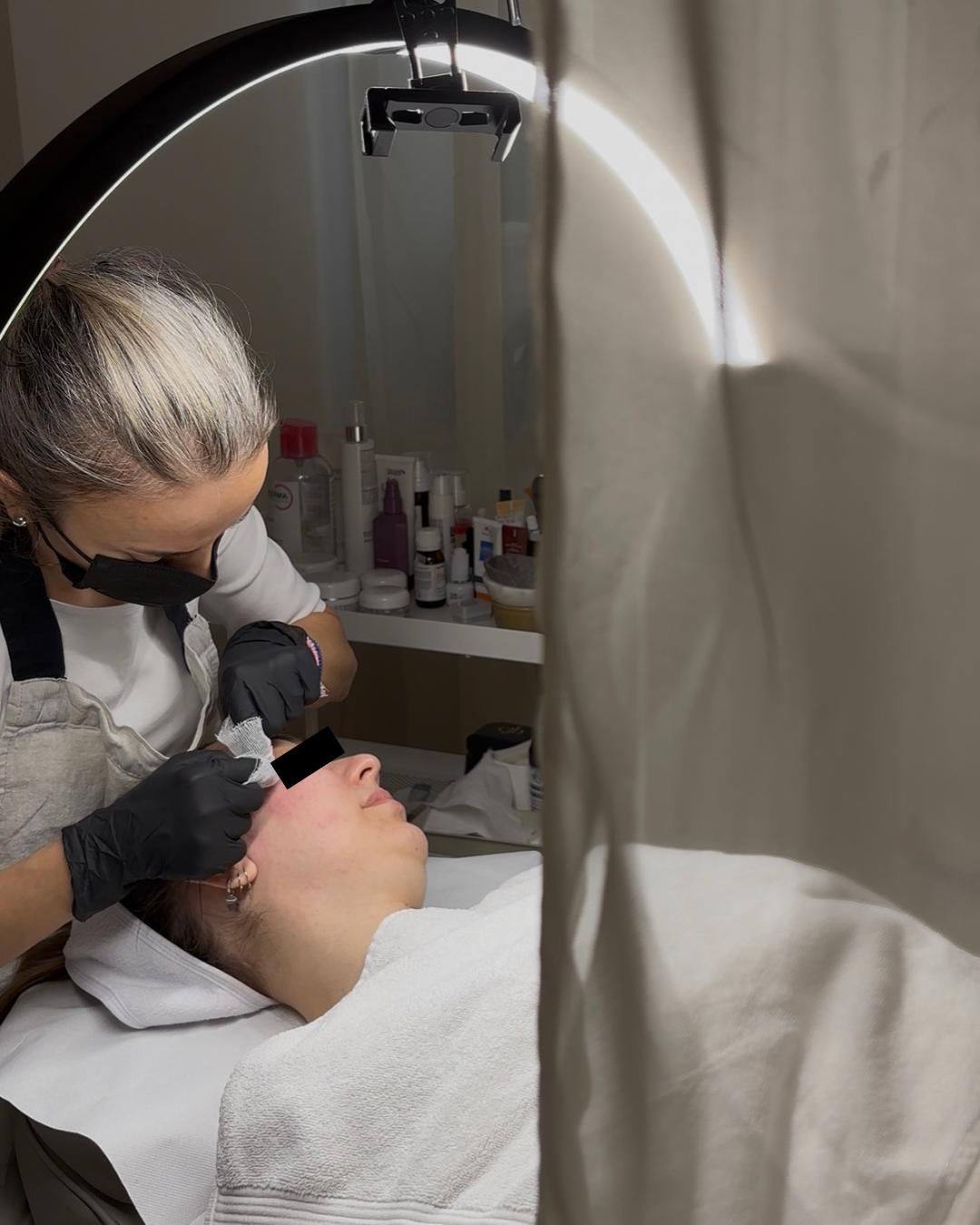
What Is Skin Reset and Why Do You Need It?
Skin Reset is a deep-cleansing and cell-renewal ritual built around a gentle chemical peel — without the visible physical peeling most women fear, and without downtime. At most, you may notice mild redness that fades on its own within a few hours. Here’s how it works, who it’s for, and how to prepare.
I’ll admit, the name sounds a little scary. But the products I use in the studio — from the Linda Kristel range — don’t necessarily create the visible, physical peeling that worries so many women today. You won’t leave the studio with your skin flaking off just to prove to yourself that it “worked.”
What is a chemical peel?
A chemical peel is the process of applying a solution to the skin that stimulates cell renewal, reduces texture, smooths the surface layer of the skin — the epidermis — and makes it easier to clear comedones, where they exist.
Does a chemical peel hurt or make your skin visibly flake?
No — not with the approach I use. A good chemical peel doesn’t mean visibly flaking skin, dramatic redness, or days of recovery spent at home. That image — the one most people associate with “peels” — comes from more aggressive treatments with high concentrations, designed for fast results rather than long-term skin health.
I don’t work with “heavy artillery,” because life doesn’t keep either of us at home recovering from a cosmetic treatment. The difference between a well-chosen chemical exfoliant and an aggressive one isn’t just in the results — it’s in how much of your life you have to put on pause for it.
What are the benefits of a chemical peel?
The benefits depend on what we want to address and on the active ingredient used. A chemical peel can help skin with:
- Congestion
- Acne
- Dark spots
- Dull appearance
- Fine lines
- Uneven texture
Is there downtime after Skin Reset?
No, not in the classic sense. At most, you’ll notice mild redness immediately after the treatment, which fades on its own over the following hours. You can leave the studio and carry on with your day as normal.
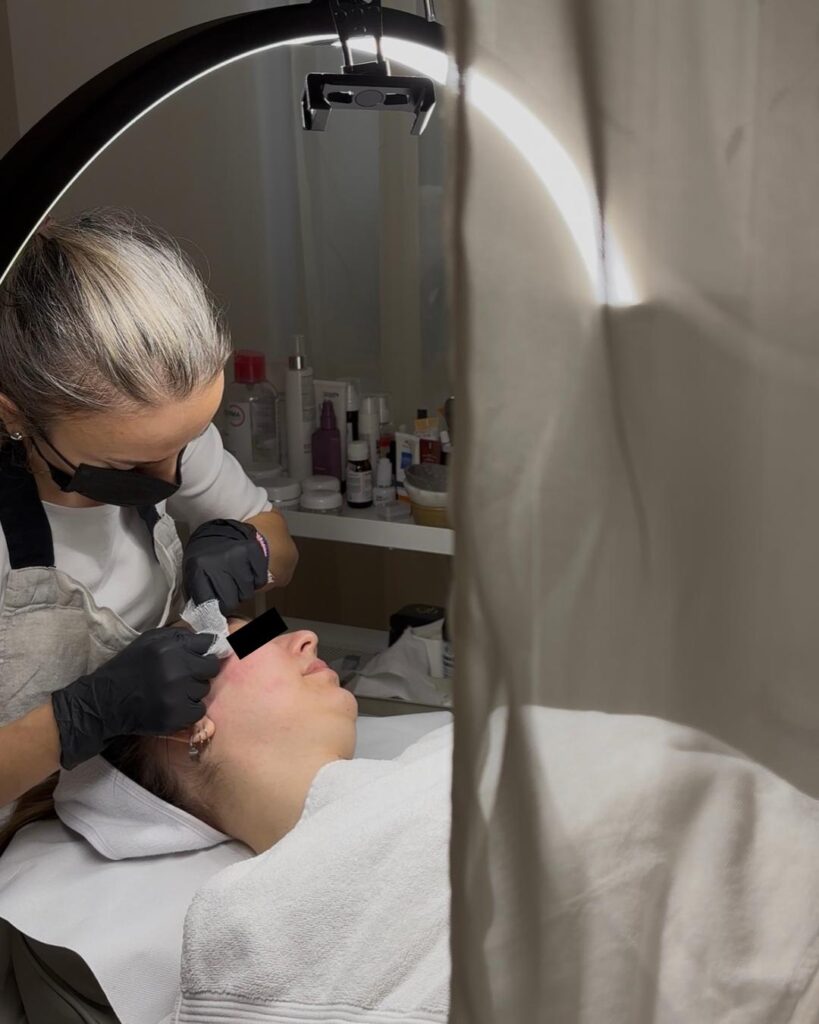
Who should not get a chemical peel?
There are a few clear contraindications, which we always check before the treatment.
Medical contraindications
- Cancer, chemotherapy, radiotherapy
- Skin infections, because the skin’s immunity is compromised
Pregnancy and breastfeeding
Chemical peels are contraindicated during pregnancy and breastfeeding — except when azelaic acid or another “natural” exfoliation method is used. Salicylic acid, mandelic acid, retinol, and similar ingredients remain off-limits during this period.
How do I prepare for a chemical peel?
I always recommend pausing any skincare with active ingredients for at least 48 hours before and 48 hours after the treatment.
48 hours before
Stop using products with active ingredients (retinol, acids, high-concentration vitamin C) to prevent any risk of unnecessary irritation.
The first 48 hours after
Keep the pause on active ingredients. Your skin has already received everything it needs — anything more would mean overstimulation, with the potential to irritate.
Why would you need Skin Reset?
If you look in the mirror and see uneven texture, tired-looking skin, congestion, or spots that just won’t go away, a well-chosen chemical peel may be the answer — without the drama you’re imagining. That’s the real promise behind Skin Reset: real results, without asking you to put your life on hold for them. Combined with an at-home skincare routine, this ritual is ideal for all of the situations above.
How many Skin Reset treatments do I need?
It depends on what needs improving. For acne, a treatment every month or every 2 weeks is recommended.
Ideally, a ritual like this should happen at least once every 2–3 months — unless there are concerns like acne, congestion, or dark spots, in which case the right frequency will be recommended in the studio.